

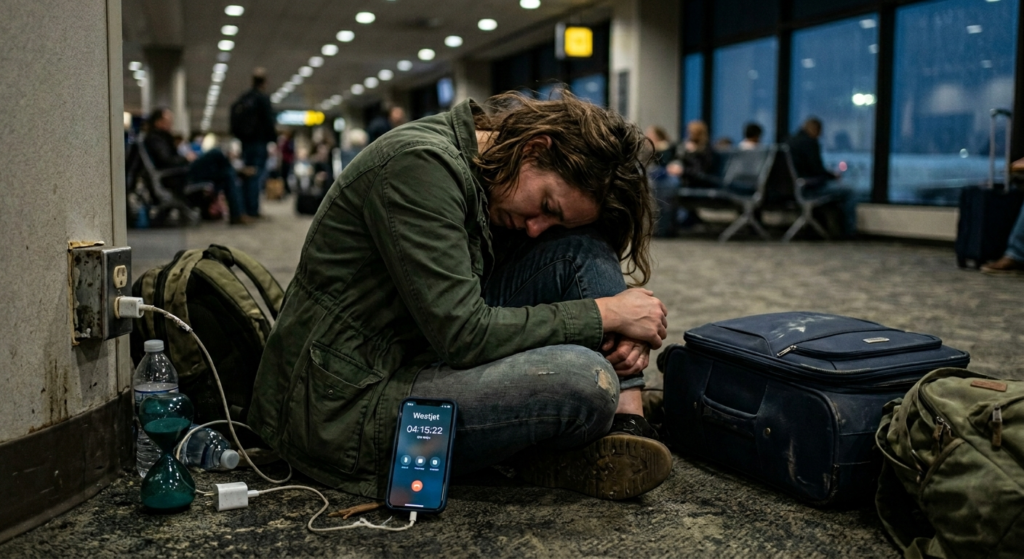
The Marathon on Hold: Why You Need to Speak to a Westjet Agent and How to Skip the Queue
Summary
Booking a flight should be the exciting first step of a journey, but when things go wrong, contacting your airline can quickly become the most exhausting part of the trip. While WestJet remains a beloved staple of Canadian aviation, offering an extensive network of domestic and sun destinations, attempting to navigate their contact center during a disruption is notoriously painful. Wait times during winter storms or system glitches can stretch into the double digits, turning simple requests into agonizing, day-long chores. This article dives deep into the primary reasons travelers are forced to pick up the phone, the devastating psychological and logistical toll of enduring the WestJet hold queue, and how you can permanently bypass this nightmare. We introduce LTS, a revolutionary agentic phone call assistant designed to wait on hold and literally speak on your behalf, ensuring that the next time you need to reach customer service, your personal wait time is exactly zero.
The Turbulence of Travel and the Phone Chore Tax

Canadians love to travel. Whether it is escaping the brutal deep freeze of February for the beaches of Cancun, visiting family across the vast expanse of the prairies, or making crucial business connections in Toronto or Vancouver, air travel is a fundamental part of our lives. For decades, WestJet has positioned itself as the friendly, accessible alternative in the Canadian skies.
However, the modern realities of commercial aviation are complex, and the friendly skies can quickly become turbulent when Mother Nature, mechanical issues, or complex itinerary rules intervene. While WestJet has invested heavily in its digital infrastructure, website, and mobile app, a glaring reality remains: automated self-serve tools are rigid. They follow strict, pre-programmed logic. When your specific travel problem falls outside those narrow parameters, the digital doors slam shut.
At that precise moment, a hidden “tax” is levied on your vacation or business trip. It is not a financial tax; it is a profound tax on your time. You are forced into a phone chore.
When the digital system flashes a cryptic error code or bluntly states “Please contact us to complete this transaction,” you have no choice but to dial the 1-888 number and attempt to reach a live human being. This is rarely a brief undertaking. For many travelers, it marks the beginning of a grueling psychological endurance test against automated menus, looped music, and unimaginable hold times. This article will dissect exactly why the website isn’t enough, explore the crushing reality of the contact center queue, and reveal how leveraging LTS can completely eliminate this modern burden.
Part I: The Top Reasons You Have No Choice But to Call WestJet

Airlines aggressively push customers toward digital self-service for a simple reason: human agents cost money. Therefore, when millions of people still flood the phone lines annually, it is not out of a desire for a friendly chat. It is a technological necessity. Here are the most common, unavoidable scenarios where travelers must initiate a phone chore to save their itineraries.
1. Navigating IROPs (Irregular Operations) and Severe Weather
This is the undisputed heavyweight champion of the airline phone chore. In Canada, severe weather is not an anomaly; it is an annual guarantee. When a massive winter storm blankets Calgary, a deep freeze paralyzes Edmonton, or a thunderstorm shuts down the ramp at Toronto Pearson, the resulting chaos is known as Irregular Operations (IROPs).
During an IROP, thousands of flights are cancelled or delayed within hours. WestJet’s automated system attempts to rebook passengers, but the algorithms prioritize putting a body in a seat, regardless of the logic. You might find yourself rebooked on a flight that departs three days later, or an itinerary that turns a three-hour direct flight into a 24-hour marathon with multiple overnight layovers.
The Pain Point: The website will lock you out of fixing this yourself. If the automated rebooking ruins your vacation or misses your business meeting, the only way to find a creative routing—perhaps utilizing a partner airline like AirCanada, or flying into a nearby alternative airport—is to speak directly to a live representative who has the authority to override the system’s broken logic.
2. The Nightmare of Adding Pets to a Reservation
Traveling with a furry family member should be joyful, but the logistical hurdles are immense. WestJet, like most airlines, has strict capacity limits for animals on every aircraft. A specific Boeing 737 might only have space for two pets in the cabin and three in the cargo hold.
Because this inventory is highly restricted and requires specific aircraft parameters (like heated cargo bays), you cannot simply click a button online to guarantee your pet’s passage. The standard operating procedure dictates that you must book your own human ticket online to secure your seat, and then immediately call in to add the pet. If you wait on hold for four hours only to discover the pet quota for that flight is already full, you are trapped. You must then negotiate a complete flight change or cancellation, all while the hold timer ticks away.
3. WestJet Rewards, Travel Bank, and Companion Voucher Glitches
Loyalty programs are designed to reward frequent flyers, but redeeming those rewards often feels like a punishment. WestJet Rewards issues Companion Vouchers to its premium credit card holders—a highly valuable perk that allows a second guest to fly for a heavily discounted base fare.
However, applying these vouchers online is fraught with peril. If you are trying to book a complex multi-city trip, or if your name in the WestJet profile does not perfectly match the name on the credit card account down to the middle initial, the website will reject the voucher. Furthermore, attempting to combine a Companion Voucher with a Travel Bank credit (funds held from a previously cancelled flight) almost guarantees a website crash at the checkout screen. To unlock the value you rightfully earned, you must initiate a phone chore and have an agent manually build the ticketing profile.
4. Special Needs and Accessibility Accommodations
Air travel must be accessible to everyone, but the digital tools severely lag behind the physical requirements of passengers. If a traveler requires specific accommodations—such as specialized wheelchair assistance (e.g., needing an aisle chair to reach their seat, or transporting a heavy motorized chair with dangerous goods batteries)—the online checkboxes are insufficient.
Ensuring that the ground crew at both the departure and arrival airports are fully briefed on a complex medical or mobility requirement requires detailed, human-to-human communication. Travelers with disabilities are routinely forced to spend hours on hold simply to guarantee that their basic human dignity and mobility will be respected on travel day.
5. WestJet Vacations Modifications
Booking a packaged holiday (flight, hotel, and transfer) through WestJet Vacations is a popular way to escape the winter. While the initial purchase is easy to do online, modifying that package is a nightmare.
If you need to change the dates of your resort stay, upgrade your room category after booking, or correct a spelling error on a guest’s name, the standard WestJet flight management portal will not work. These packages involve third-party hotel contracts and ground transportation manifests. You are required to call a dedicated WestJet Vacations queue, which often operates with significantly fewer staff members than the main airline queue, leading to excruciatingly long wait times for simple administrative fixes.
Anatomy of an Agony: The Real realities of the Wait Time
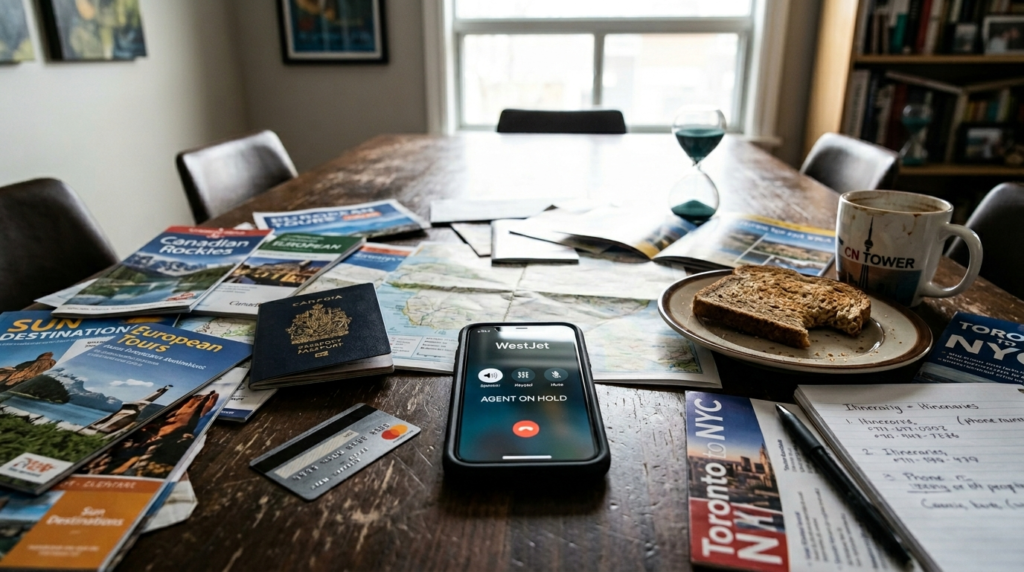
Understanding the structural reasons why we are forced to call is merely the prelude to the true suffering: the wait itself. The experience of holding for airline customer service is a unique, modern form of psychological warfare that actively drains your time, energy, and patience.
The Delusion of the “Estimated Wait Time”
Your ordeal begins the moment you navigate the robotic Interactive Voice Response (IVR) system. You press ‘1’ for English, ‘3’ for existing reservations, type in your 13-digit ticket number, and are finally greeted by an automated voice stating: “Due to unexpectedly high call volumes, your estimated wait time is greater than two hours.”
In the airline industry, “unexpectedly high call volumes” is a constant state of being. The estimate itself is a psychological anchor that forces you into a stressful calculation. Do you hang up and risk your vacation? Or do you commit? The sheer brutality of the system is its lack of transparency; “greater than two hours” routinely turns into five, six, or even eight hours during a major Canadian snowstorm or a mass cancellation event.
The Failure of the Callback Feature
Airlines often tout their “virtual hold” or callback feature as the ultimate customer service solution. The prompt offers: “Press 1 to keep your place in line, and we will call you back when it is your turn.”
In theory, this is brilliant. In practice, it is a gamble. During severe operational meltdowns, the callback system frequently breaks down. Travelers report requesting a callback on a Tuesday, only to receive the return call on Thursday—long after their original flight has departed without them. Worse, if the automated system calls you back and you happen to miss the phone ringing for ten seconds because you went to the washroom, the system drops you entirely. You are instantly banished to the back of the line, forced to start the multi-hour process from scratch.
The Time Tax: A Hostage Situation
Being on hold for four hours is not passive waiting; it is a profound theft of your human potential. This is the ultimate “time tax.”
You cannot deeply focus on your job because you must keep one ear trained on the phone, terrified of missing the moment the hold music stops. You cannot run loud errands, vacuum the house, or attend a critical in-person meeting. For parents, it ruins evenings that should be spent with family. For professionals, it destroys billable hours. You are effectively placed under a corporate house arrest, tethered to your device by the sheer incompetence of a contact center’s staffing logistics.
The Phantom Disconnection
This is the scenario that keeps frequent flyers awake at night. You have endured five hours of the repetitive, low-fidelity WestJet hold music. You have emotionally prepared your arguments for a refund or a route change. The music suddenly stops. You hear the distinct click of a phone line opening. You say “Hello?”… and are met with a dead dial tone.
The line has dropped. The emotional devastation of a dropped call after a half-day wait is visceral. There is no direct extension to call back. There is no supervisor to email. Your only option is to redial the main 1-888 number and place yourself squarely at the very back of a queue that is now likely even longer than when you started.
The Aggression Transfer
By the time a customer finally bridges the gap and connects with a human being, the emotional damage is done. You are no longer a reasonable, calm traveler; you are an exhausted, defensive, and frustrated hostage. The WestJet representative—who is likely overworked, stressed, and completely blameless for the five-hour wait you just endured—absorbs the brunt of this pent-up aggression. The interaction starts on hostile footing, drastically reducing the chances of a creative, empathetic, or swift resolution to your travel problem.
Part III: Bypassing the Queue: How LTS Reclaims Your Life
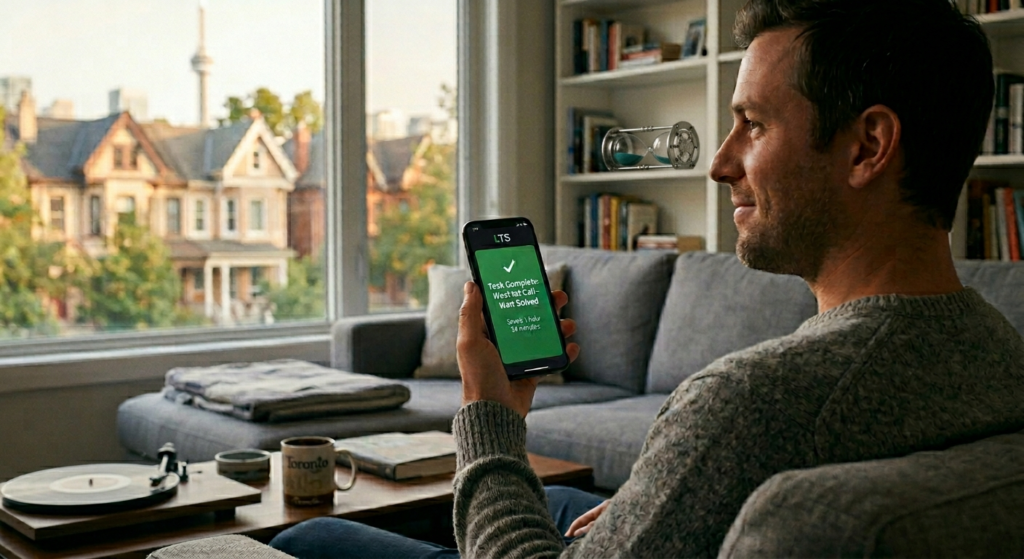
Life’s Too Short (LTS) technologies was founded on a singular, uncompromising principle: Phone chores are an unacceptable waste of human life. We do not believe that navigating a winter storm rebooking should cost you six hours of your sanity, or that applying a companion voucher requires you to sacrifice your workday to an airline’s hold music.
This is precisely why LTS exists.
LTS is not a simple directory app or a basic chatbot. It is a highly sophisticated, agentic AI-driven phone call assistant designed to execute complex, time-consuming phone chores entirely on your behalf.
How LTS Interacts with the Airline (So You Do Not Have To)
When you are faced with a WestJet IROP, a broken website booking, or the need to add a pet to your flight, you do not dial the contact center. You do not subject yourself to the misery of the IVR. Instead, you activate LTS.
Through our secure, intuitive interface, you seamlessly provide LTS with the parameters of your chore. You input your WestJet Rewards number, your booking reference (PNR), and articulate your exact need (e.g., “My flight from YYZ to YYC was cancelled. Call WestJet and rebook me on the next available flight, even if it routes through Edmonton,” or “Add a small dog in the cabin to reservation code ABCDEF and pay the fee using the credit card on file.”).
Once you hit submit, LTS takes absolute control of the chore.
The LTS Advantage: The True Power of Delegation
1. Your Personal Wait Time is Zero
When LTS takes over, your involvement in the waiting process immediately drops to zero. LTS dials the 1-888 number. LTS perfectly navigates the confusing automated menus, inputting your ticket numbers using synthesized tones. Most importantly, LTS waits on hold.
While our technology endures the five-hour wait, the dropped calls, and the repetitive hold music, you are completely free. You can close your laptop, go to sleep, head to the gym, or enjoy dinner with your family. Your schedule is no longer held hostage. Even if the airline’s queue stretches to eight hours due to a massive blizzard, your personal disruption lasted only the two minutes it took to instruct LTS.
2. Agentic Presence and Expert Negotiation
LTS is fundamentally different from a tool that merely waits and rings your phone when someone answers. LTS is an agentic assistant, meaning it possesses the agency and intelligence to speak and negotiate on your behalf when the WestJet representative finally picks up the line.
Our systems are deeply trained on airline terminology, booking classes, and standard operating procedures. When the agent says “Hello, how can I help you?”, LTS responds with natural, professional articulation: “Hello, I am an AI assistant calling on behalf of [Your Name]. Their flight WS123 was cancelled due to weather. I need to rebook them on WS456 departing tomorrow morning at 8:00 AM.” LTS flawlessly handles security verifications, dictates phonetic spelling of names, and requests specific routing changes without ever needing to pull you away from your life.
3. Smart Escalation for Crucial Decisions
Travel rebooking often involves dynamic choices. If LTS reaches the agent and discovers your desired flight is sold out, but an alternative is available for an additional fee, LTS does not guess.
You can pre-configure LTS with specific thresholds (e.g., “Approve any fee up to $100”), or LTS will instantly utilize smart escalation. It will place the human agent on a brief, polite hold and send you a real-time text message: “The 8:00 AM flight is full. They can confirm you on the 10:30 AM flight, but it requires a $50 fare difference. Reply YES to approve or NO to seek other options.” You simply text back, and LTS immediately relays your decision to the agent. Once the chore is complete, LTS secures the confirmation number, hangs up, and sends you a finalized itinerary report.
Conclusion: Stop Waiting, Start Living

We exist in an era of unprecedented technological advancement, yet we tolerate customer service models that demand hours of our undivided attention as the basic price of entry.
When your travel plans collapse or complex bookings break, reaching out to an airline is a strict necessity. However, sacrificing your day to a contact center queue is not. The technology now exists to completely sever the link between a corporate bottleneck and your personal productivity.
Your time is the only asset you can never earn back. It is meant to be spent exploring the destinations you are flying to, building your career, or resting with your loved ones. It is absolutely not meant to be squandered listening to recorded apologies on a crackling phone line.
It is time to abandon the queue. It is time to embrace true delegation.
Call to Action: Reclaim Your Time Today
[IMAGE PROMPT: A vibrant, slice-of-life photograph of a person happily walking their dog in a snowy, beautiful park. They are smiling, enjoying the fresh air. In the foreground, slightly out of focus in their jacket pocket, a smartphone shows a small, glowing green LTS indicator light, signifying the software is silently working in the background. The contrast between the stressful task and the peaceful reality is clear. Alt text: westjet speak to an agent easily by leveraging LTS delegation]
Do not let the next winter storm or website glitch steal hours of your life. The next time you are faced with an impossible booking error, a missing companion voucher, or a cancelled flight, refuse to play the waiting game. Activate LTS.
Experience the profound relief of technological delegation. Let our advanced agentic assistant navigate the chaos, endure the hold times, and negotiate the solution so you can focus on what actually matters.
Sign up for LTS today. Ensure that the next time you need a westjet speak to an agent interaction, you never have to hear the hold music yourself.
Frequently Asked Questions (FAQ)
How long is the WestJet customer service wait time right now?
Wait times are highly volatile and depend entirely on real-time operational factors. On a calm Tuesday in May, you might reach an agent in 15 minutes. During a severe winter storm, a computer outage, or the days surrounding major holidays, wait times routinely spike to anywhere from three to eight hours. Because these times are unpredictable, utilizing an agentic assistant like LTS ensures you are protected from sudden surges, as the software absorbs the entire wait duration on your behalf.
Does WestJet have a call back option?
Yes, WestJet’s phone system typically offers a callback feature, allowing you to supposedly hold your place in line without staying on the phone. However, this system is frequently disabled during massive operational meltdowns when the queues max out. Additionally, users often report that callbacks can happen hours or even days later, or that missing the callback by mere seconds results in losing your place entirely. LTS offers a much more robust solution by actively holding the line and completing the interaction for you.